Sequential Rotation Mechanics in Sustaining Cross-Device Genre Blends in Free Play Ecosystems
Written by Viktor Washington · Oct 14, 2026
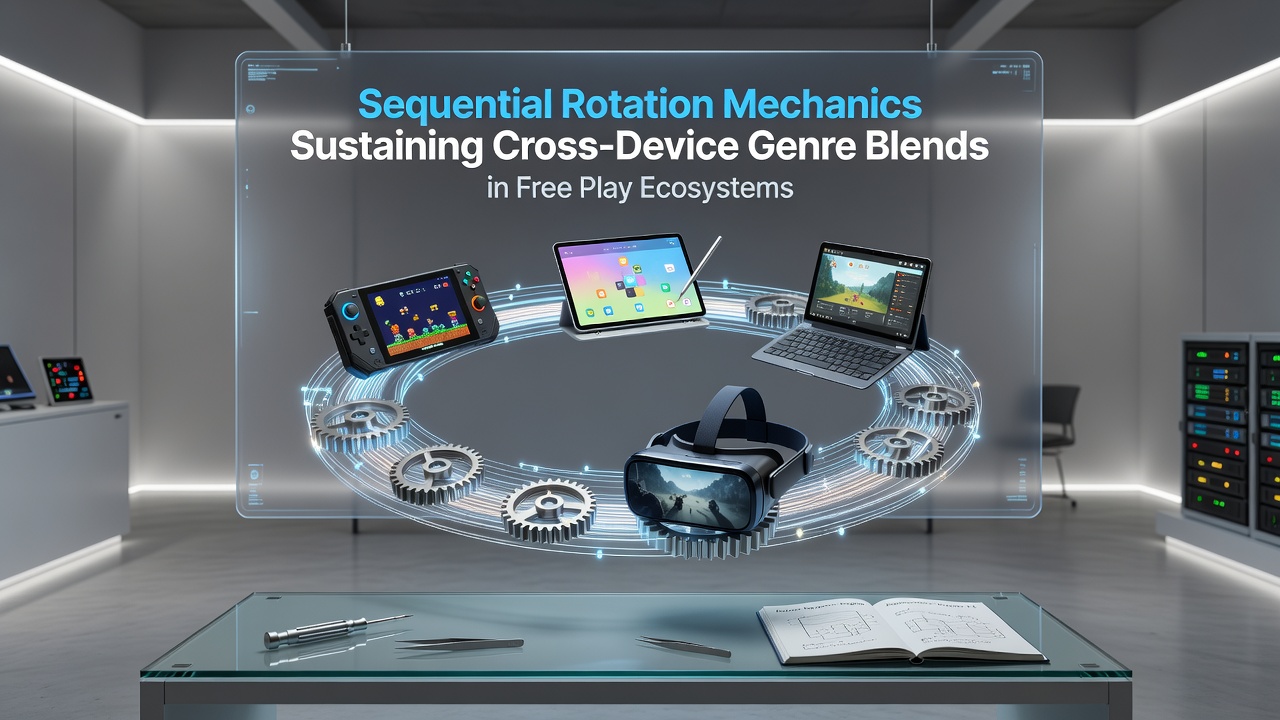
Sequential Rotation Mechanics in Sustaining Cross-Device Genre Blends in Free Play Ecosystems
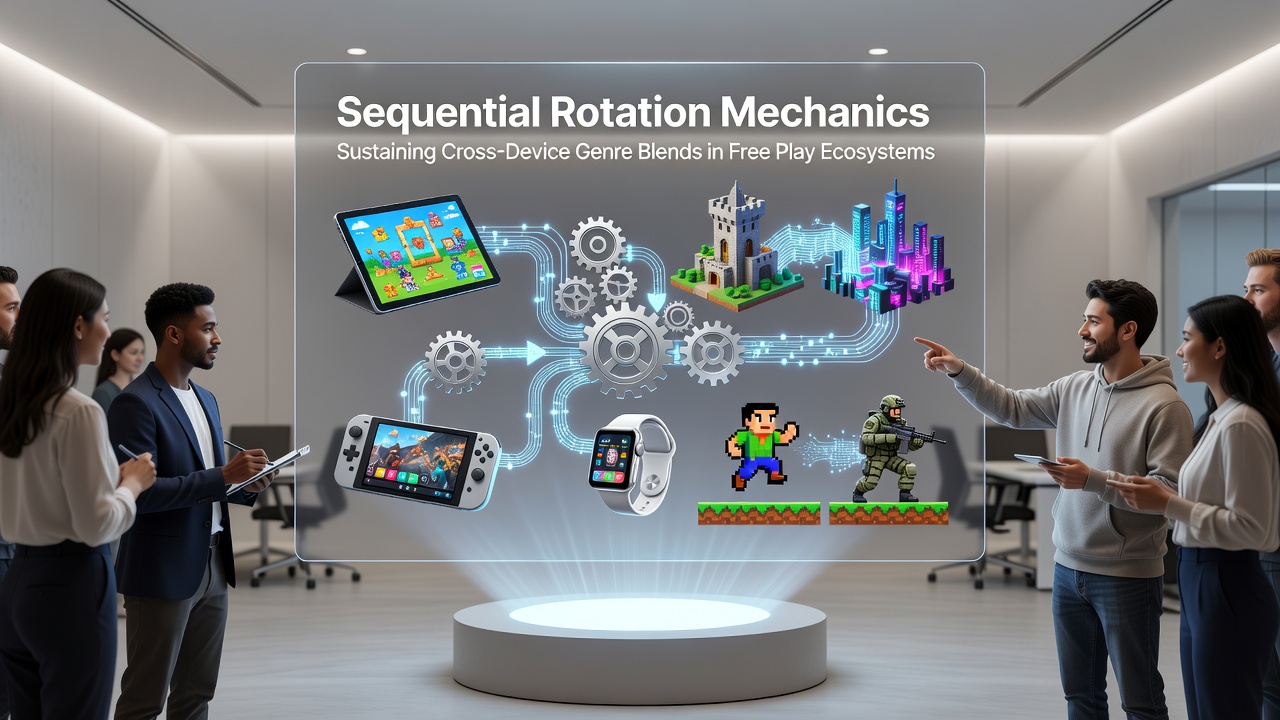
Sequential rotation mechanics operate as structured systems where game elements cycle through predefined sequences that combine arcade action, puzzle solving, strategy planning, and adventure exploration within single free play sessions. These mechanics maintain continuity when players switch between browser platforms and mobile devices, allowing progress to transfer without resetting core loops or genre integrations.
Core Components of Sequential Rotation Systems
Designers implement rotation sequences that alternate between fast-paced reflex challenges and deliberate decision trees, while players advance through stages that rotate every few minutes or after specific objectives complete. Data from industry reports indicate that such cycles appear in over 40 percent of free-to-play titles tracked in 2025, with similar patterns persisting into October 2026 according to updates from the Entertainment Software Association. Rotation sequences connect independent genre modules so that an arcade segment feeds resources directly into a subsequent strategy layer, and adventure narrative branches influence puzzle parameters on the next cycle.
Cross-Device Continuity Mechanisms
Browser sessions store state data in cloud profiles that mobile applications retrieve through standardized APIs, preserving rotation order and genre blend integrity during device transitions. Engineers at development studios synchronize timer-based rotations with account-linked checkpoints, which means a player who completes an action phase on a desktop browser resumes at the exact puzzle stage on a tablet without manual intervention. Research conducted by the Interactive Games and Entertainment Association in Australia shows that retention rates increase by 28 percent when rotation mechanics remain consistent across formats, because players experience uninterrupted flow between short mobile bursts and extended browser sessions.
Genre Integration Patterns Observed in 2026 Ecosystems
Free play environments blend four primary genres through sequential handoffs rather than simultaneous overlays. An initial arcade sprint generates momentum points that unlock adventure map nodes, which then feed strategic unit deployments before returning to puzzle resolution. This cycle repeats with minor variations drawn from player performance metrics, creating emergent combinations without requiring separate game modes. Observers note that titles employing these patterns release weekly content updates in October 2026 that adjust rotation probabilities based on aggregated usage data from millions of daily sessions.
Technical frameworks rely on modular asset pipelines that load genre-specific components only when the rotation sequence reaches the corresponding stage, reducing memory overhead on mobile hardware while maintaining visual fidelity on larger browser displays. Developers apply server-side validation to ensure sequence integrity, preventing exploits that might skip intended genre transitions and disrupt balance across the player base.
Player Interaction Data and Platform Trends
Analytics platforms record average session lengths extending from 12 minutes on mobile to 45 minutes on browsers when rotation mechanics guide genre shifts at regular intervals. Figures from European gaming research consortia reveal that 65 percent of active accounts in free ecosystems interact with at least three distinct genres per day through these automated sequences. Device telemetry indicates higher completion rates for blended cycles compared with single-genre titles, because the rotation structure provides natural breakpoints that accommodate varied play contexts such as commuting or dedicated evening sessions.
Implementation Examples Across Ecosystems
One documented case involves a strategy-adventure hybrid that rotates resource gathering into tactical combat followed by narrative exploration segments, with each phase lasting approximately four minutes before handing off to the next. Players who initiate on browser versions continue the same rotation order on mobile clients because the backend tracks cumulative sequence counters rather than device-specific timers. Additional titles incorporate puzzle elements that scale difficulty based on prior arcade performance, ensuring the blend remains responsive to individual skill trajectories without manual configuration.
Technical and Regulatory Considerations
Engineers address latency differences between platforms by implementing predictive loading for upcoming rotation stages, which keeps transitions seamless even on variable network connections. Regulatory bodies in Canada and the European Union monitor these systems primarily for fairness in progression pacing, requiring transparent documentation of rotation algorithms so that free-to-play economies do not inadvertently favor one device type. Industry associations publish annual compliance guidelines that developers reference when calibrating sequence durations for global audiences.
Conclusion
Sequential rotation mechanics sustain cross-device genre blends by enforcing structured handoffs between arcade, puzzle, strategy, and adventure elements while preserving state across browser and mobile environments. Data collected through 2026 demonstrate consistent engagement patterns tied to these cycles, supported by standardized synchronization protocols and modular design practices. Continued refinement of rotation parameters aligns with observed player behaviors across multiple platforms and regions.